Projects

Élans

Élans is a full evening choreographic work for seven dancers, composed of three parts: Élan, Counterpoint, and Dust and Shadows.

Premiere: March 2026 — Salle Nougaro

Music: Dvořák / Vivaldi (Bassoon Concerto in E minor) / Massive Attack


DISCOrde

DisCord begins with a simple action: tuning an old radio.

As fragmented sounds and unstable frequencies emerge, the performer becomes increasingly affected by the music. The body begins to move almost against its own will, pulled into a repetitive physical state that gradually intensifies.

The choreography develops through accumulation rather than narration. Small gestures repeat, expand, and return in altered forms, building a growing sense of pressure and inevitability. What begins as minimal movement slowly transforms into a dense choreographic structure where memory, rhythm, and physical exhaustion become intertwined.

Throughout the piece, the performer appears suspended between presence and observation, as if witnessing himself from a distance. The work remains deliberately open: the dance may resemble a memory, a reconstruction, a ritual, or a form of disappearance.

The radio functions both as object and trigger — a source of instability that continuously reorganizes the performer’s relationship to time, movement, and perception.

DisCord explores how repetition can alter emotional meaning, and how a body exposed to rhythm long enough begins to shift between control and surrender.

Like a forest

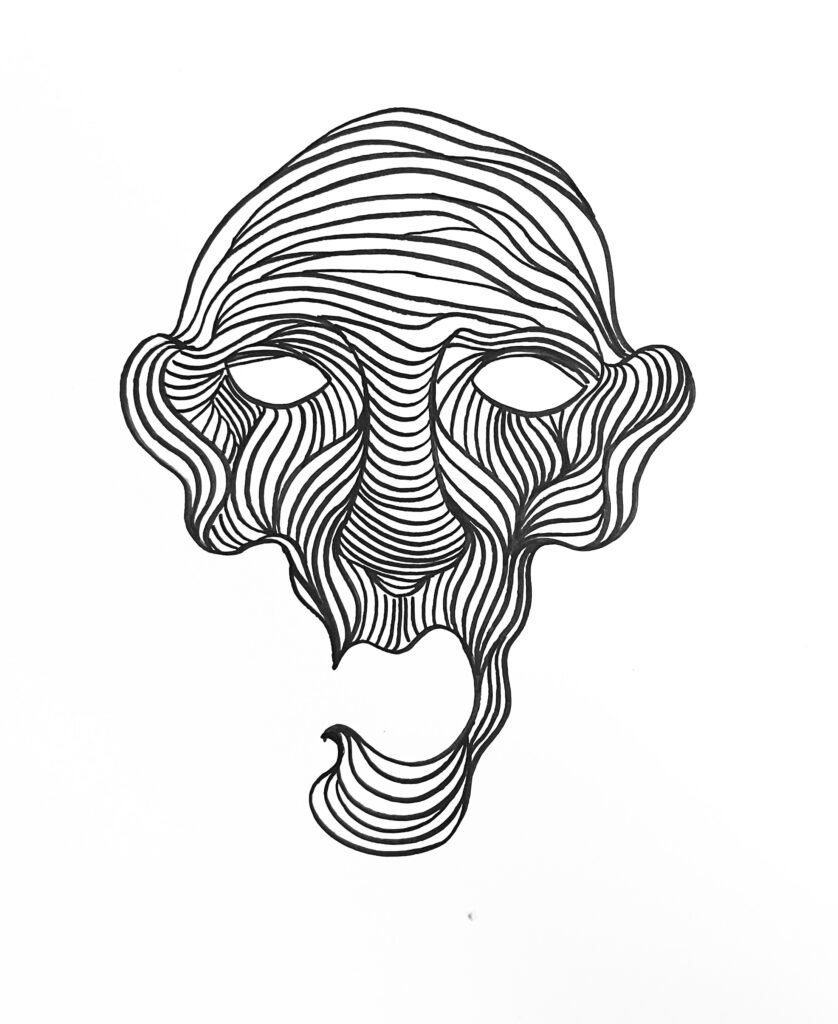
Like a Forest is an immersive installation composed of repeated ink portraits arranged throughout the exhibition space.

The work consists of 60–72 hand-drawn faces on paper, installed in vertical formations that create a rhythmic and spatial environment rather than a traditional sequence of individual works.

The portraits depict faces with closed eyes and open mouths. Their expressions remain intentionally unresolved: breathing, singing, grieving, resting, calling out, or suspended in silence.

Through repetition and variation, the drawings begin to function collectively. Visitors move through the installation as though entering a landscape of presences — individual yet interconnected.

The project originates from a daily drawing practice rooted in concentration, stillness, and repetition. Over time, the accumulation of faces became a reflection on fragility, emotional endurance, and the quiet forms of vulnerability shared between people.

The installation is conceived as spatial choreography. Rhythm, spacing, density, and viewer movement all contribute to the experience of the work. Faces appear and disappear depending on perspective, creating shifting relationships between intimacy, anonymity, and recognition.

A participatory component may accompany the installation, inviting visitors to write anonymous reflections onto printed portrait copies. These additions gradually extend the work into a collective emotional archive shaped by multiple voices.

img 1060

What's on your mind?


Work in Progress

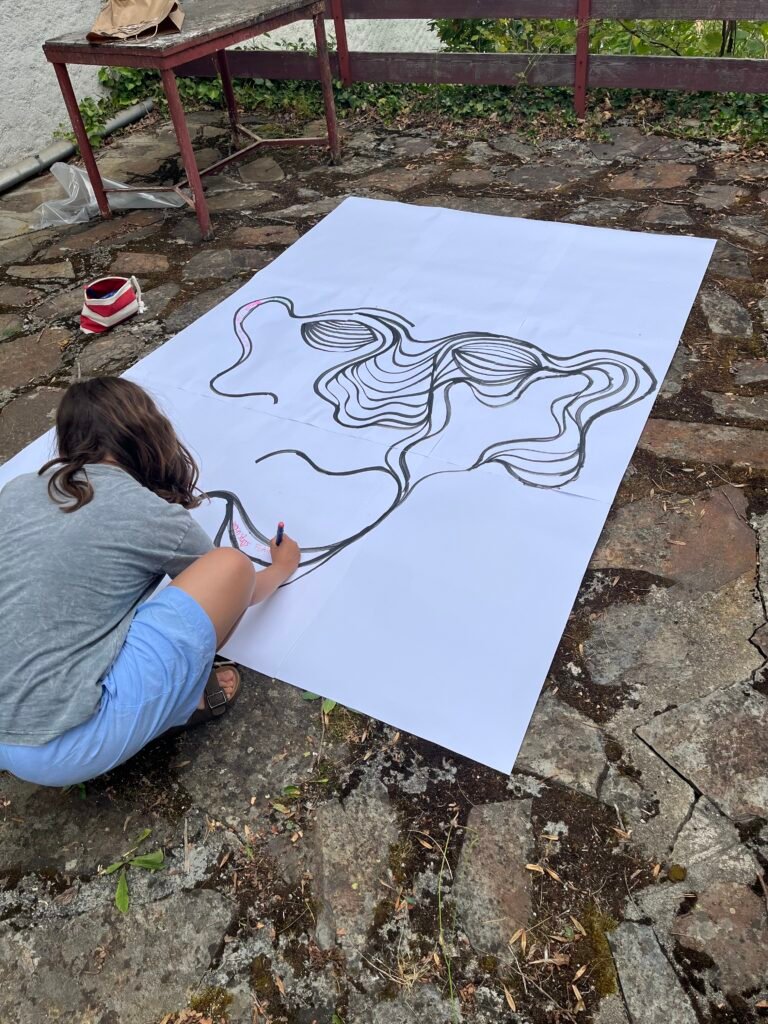
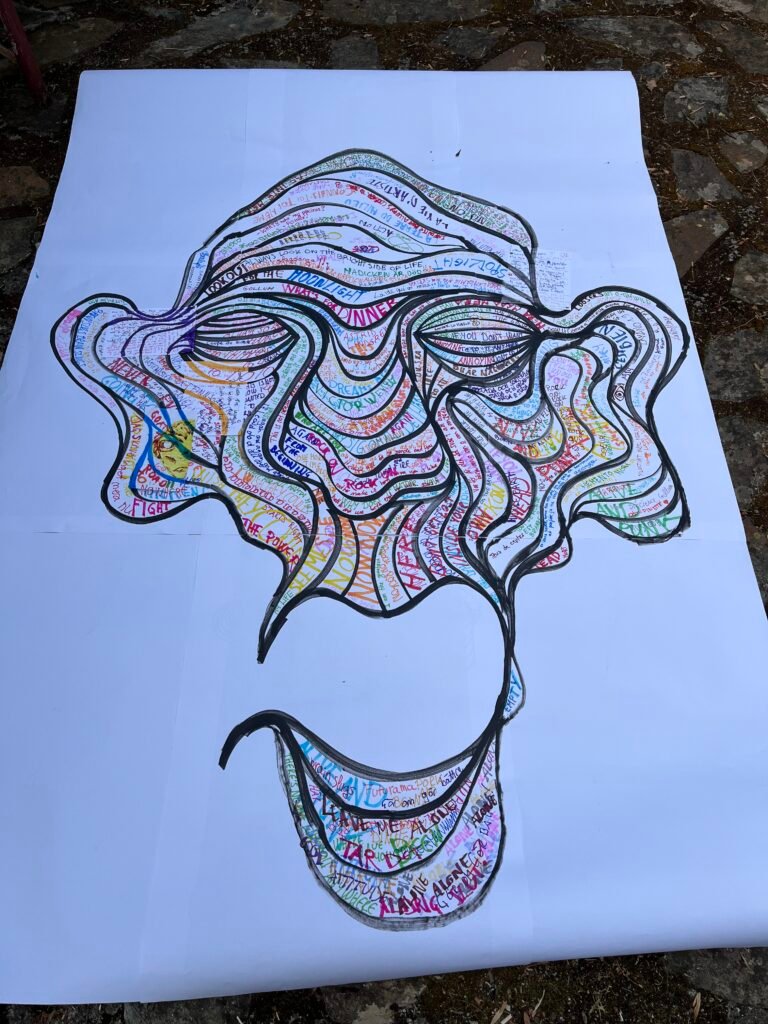
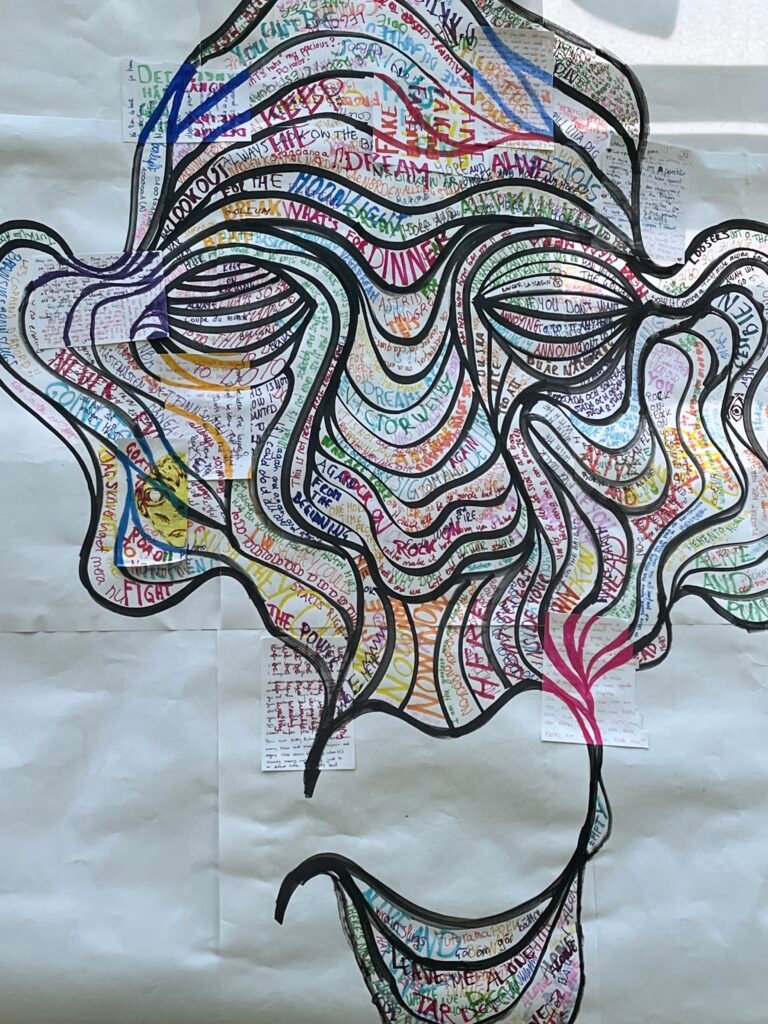
WHAT’S ON YOUR MIND is a participatory installation exploring drawing, anonymous writing, and collective transformation.

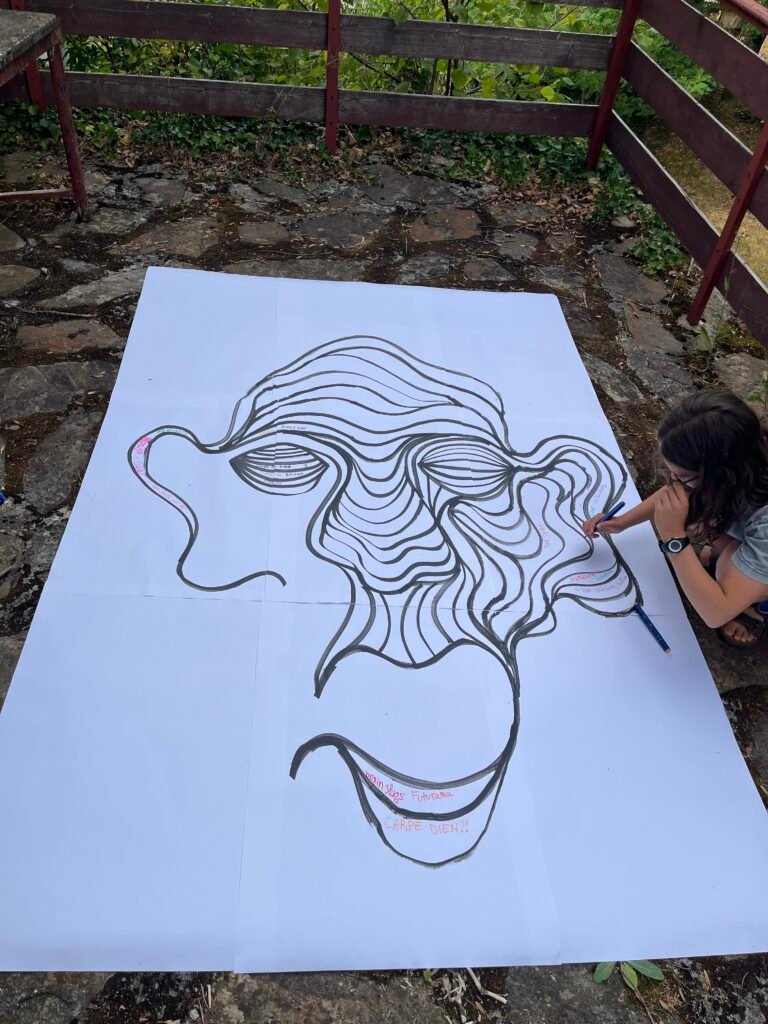
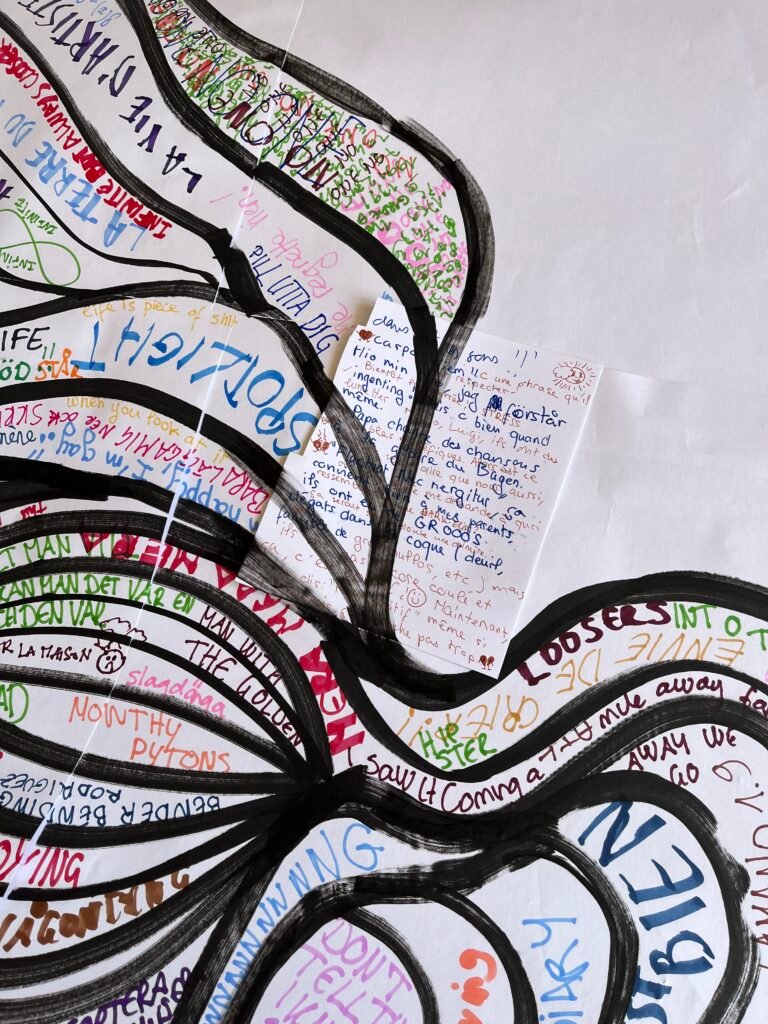
The project begins with a large hand-drawn face composed of layered ink lines. Rather than representing a specific person, the face becomes an open structure—a shared surface where many voices can gather.

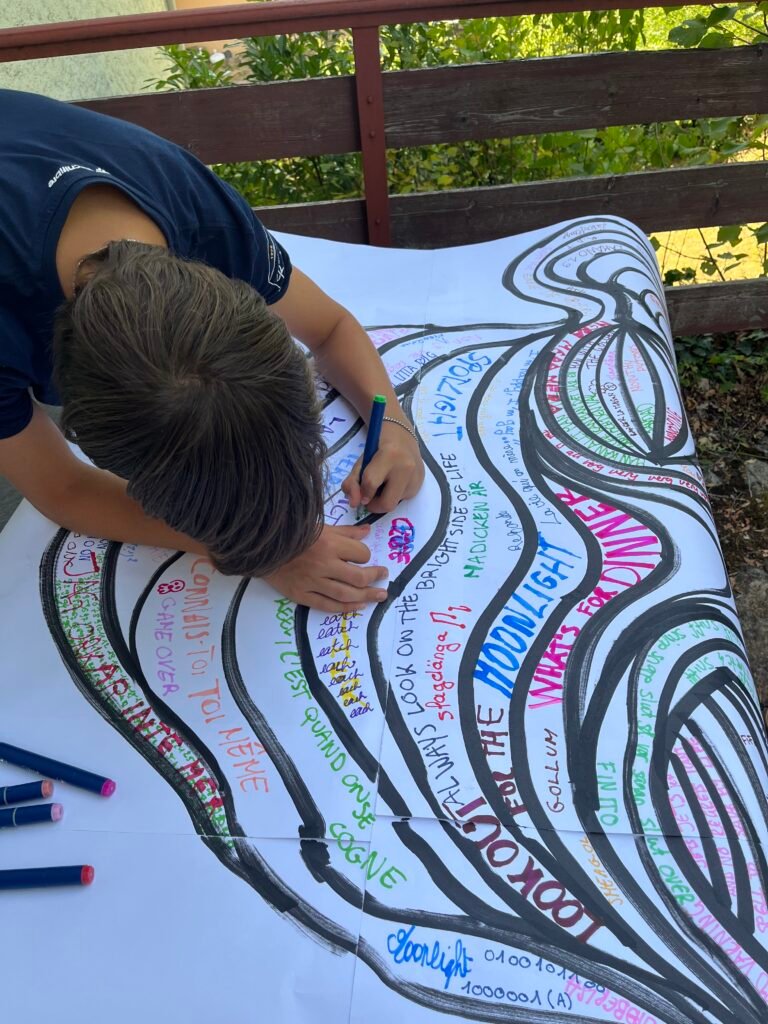
Visitors are invited to respond to a single open question:

What’s on your mind?

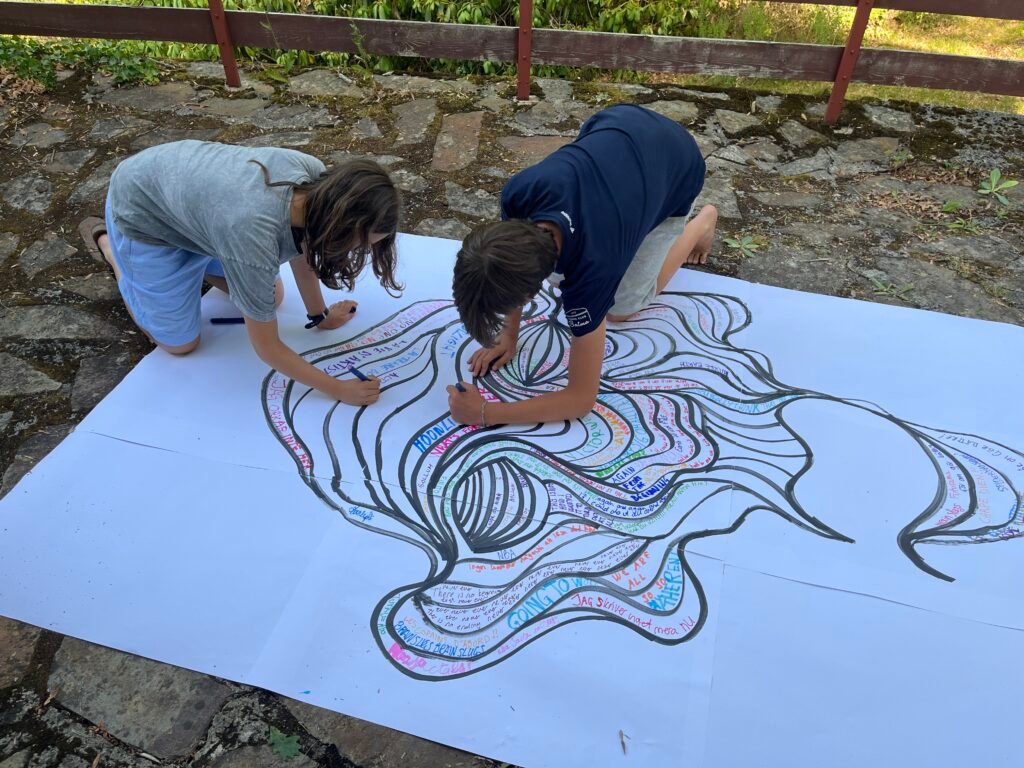
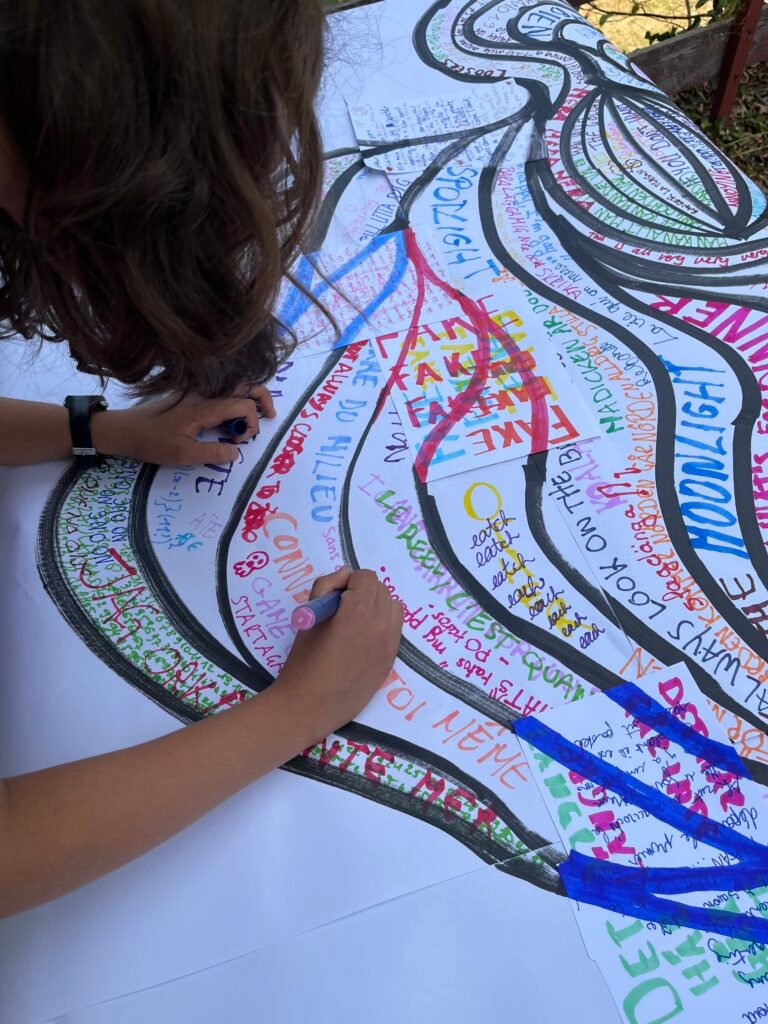
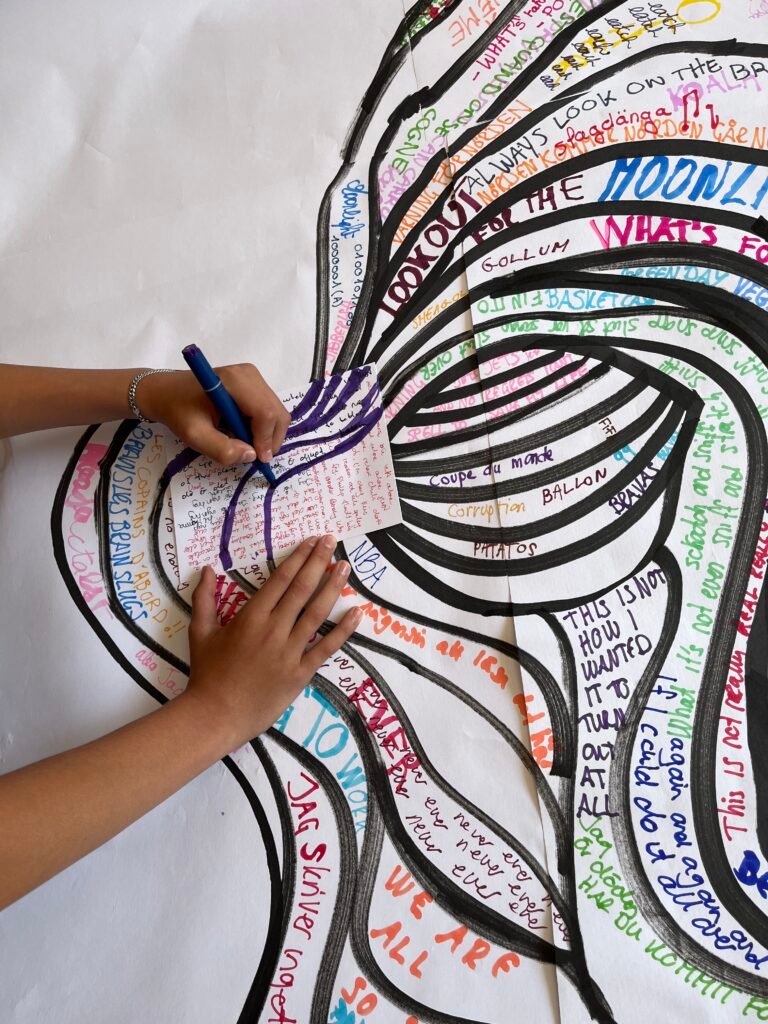
The question is intentionally left open to interpretation. Participants may write a passing thought, a memory, a question, a dream, a worry, a list, or something entirely unexpected. Every contribution is anonymous, and there is no expectation that it should be personal or profound.

Each response is written on an individual sheet of paper before being added to the larger drawing. As more pages accumulate, the face slowly changes. Earlier writings remain partially visible while new layers continue to reshape the image. I return to the work throughout the process, drawing across the growing surface and reconnecting old and new layers without erasing what came before.

From a distance, the installation appears as a single face. Up close, it reveals hundreds of individual traces—different voices, thoughts, and fragments existing side by side.

Like people, the work is never finished. It changes through time, encounters, and accumulated experience. Rather than returning to an original state, the drawing continues to evolve while carrying the visible marks of its own history.

WHAT’S ON YOUR MIND explores how a simple invitation can transform a drawing into a shared portrait shaped by many minds, belonging to no one and everyone at the same time.
Prototype development, Toulouse, France (2026). Initial studies exploring anonymous participation, layered paper, and the transformation of a large-scale drawing through collective contributions.

img 2564
img 2575 2
img 2593 2
img 2566 2
img 2584 2
img 2591
img 2585 2
img 2576 2
img 2601 2
img 2239
what is on my mind?
img 2240
img 2274
img 2255
img 2276