Élans
Élans is a full evening choreographic work for seven dancers, composed of three parts: Élan, Counterpoint, and Dust and Shadows.
Premiere: March 2026 — Salle Nougaro
Music: Dvořák / Vivaldi (Bassoon Concerto in E minor) / Massive Attack
DISCOrde
DisCord begins with a simple action: tuning an old radio.
As fragmented sounds and unstable frequencies emerge, the performer becomes increasingly affected by the music. The body begins to move almost against its own will, pulled into a repetitive physical state that gradually intensifies.
The choreography develops through accumulation rather than narration. Small gestures repeat, expand, and return in altered forms, building a growing sense of pressure and inevitability. What begins as minimal movement slowly transforms into a dense choreographic structure where memory, rhythm, and physical exhaustion become intertwined.
Throughout the piece, the performer appears suspended between presence and observation, as if witnessing himself from a distance. The work remains deliberately open: the dance may resemble a memory, a reconstruction, a ritual, or a form of disappearance.
The radio functions both as object and trigger — a source of instability that continuously reorganizes the performer’s relationship to time, movement, and perception.
DisCord explores how repetition can alter emotional meaning, and how a body exposed to rhythm long enough begins to shift between control and surrender.
Like a forest
Like a Forest is an immersive installation composed of repeated ink portraits arranged throughout the exhibition space.
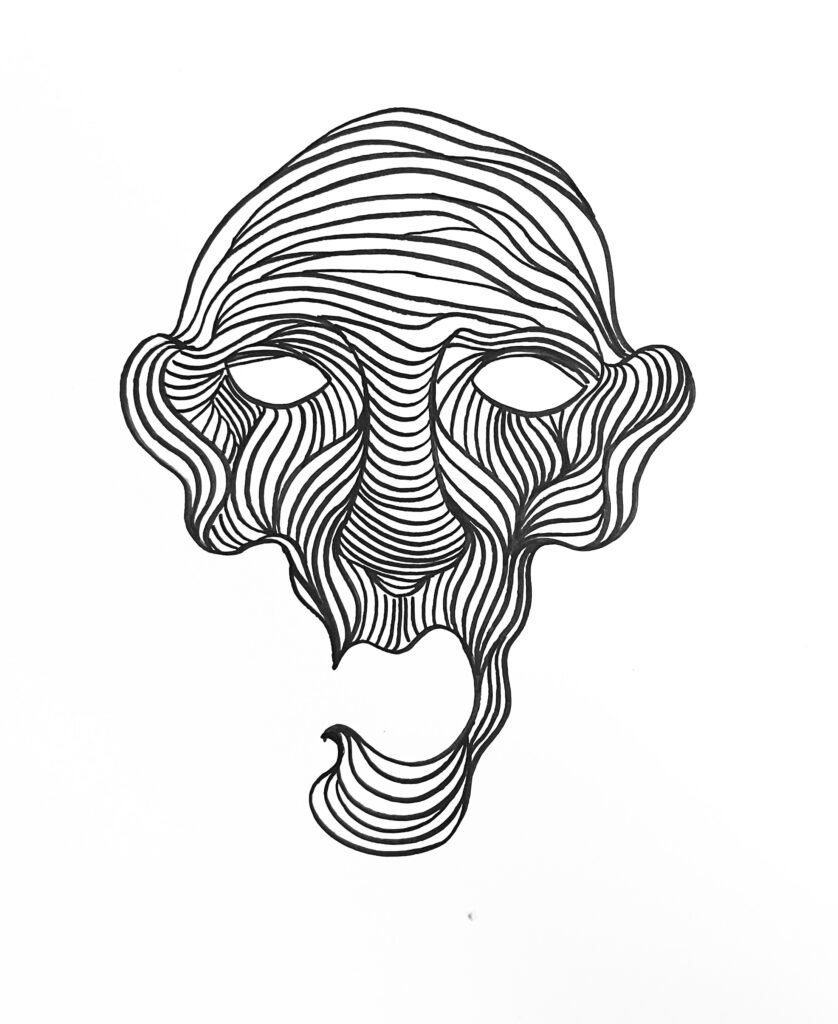
The work consists of 60–72 hand-drawn faces on paper, installed in vertical formations that create a rhythmic and spatial environment rather than a traditional sequence of individual works.
The portraits depict faces with closed eyes and open mouths. Their expressions remain intentionally unresolved: breathing, singing, grieving, resting, calling out, or suspended in silence.
Through repetition and variation, the drawings begin to function collectively. Visitors move through the installation as though entering a landscape of presences — individual yet interconnected.
The project originates from a daily drawing practice rooted in concentration, stillness, and repetition. Over time, the accumulation of faces became a reflection on fragility, emotional endurance, and the quiet forms of vulnerability shared between people.
The installation is conceived as spatial choreography. Rhythm, spacing, density, and viewer movement all contribute to the experience of the work. Faces appear and disappear depending on perspective, creating shifting relationships between intimacy, anonymity, and recognition.
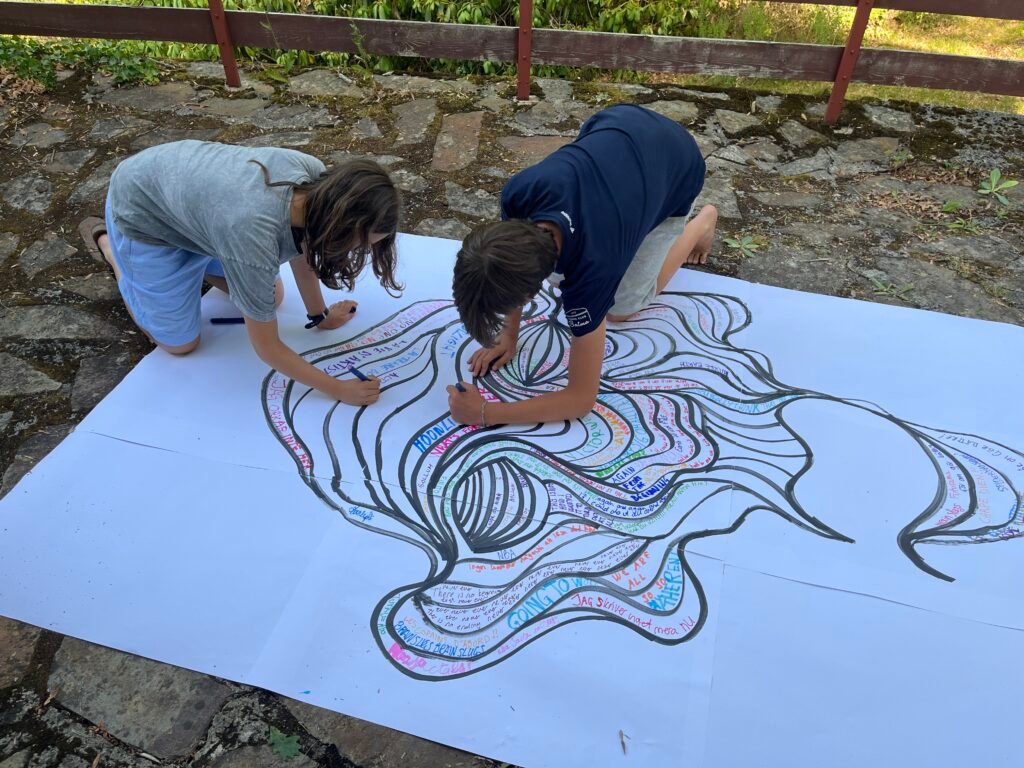
A participatory component may accompany the installation, inviting visitors to write anonymous reflections onto printed portrait copies. These additions gradually extend the work into a collective emotional archive shaped by multiple voices.
What's on your mind?
What’s On Your Mind is a participatory choreographic and visual project combining movement, drawing, writing, and spatial transformation.
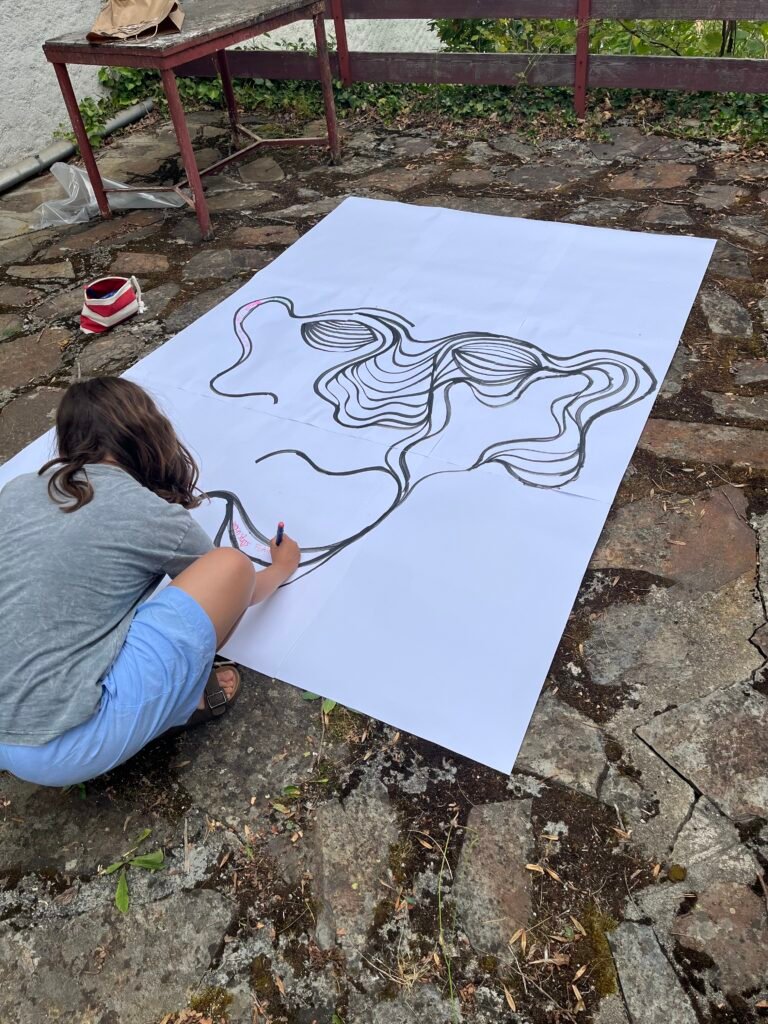
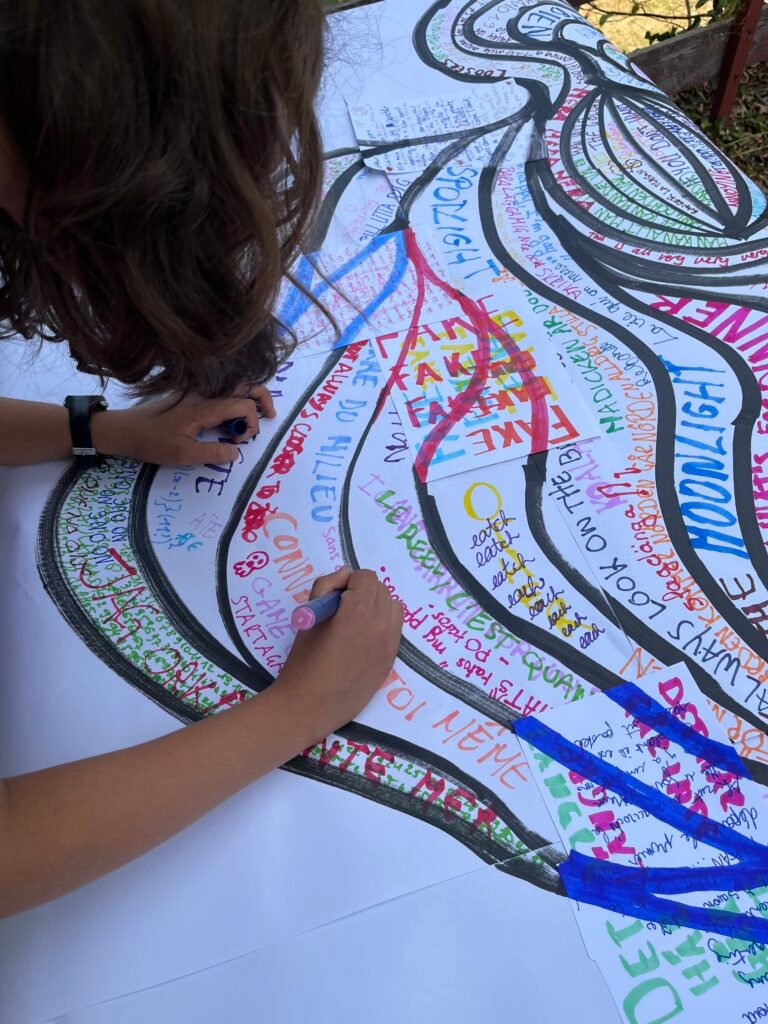
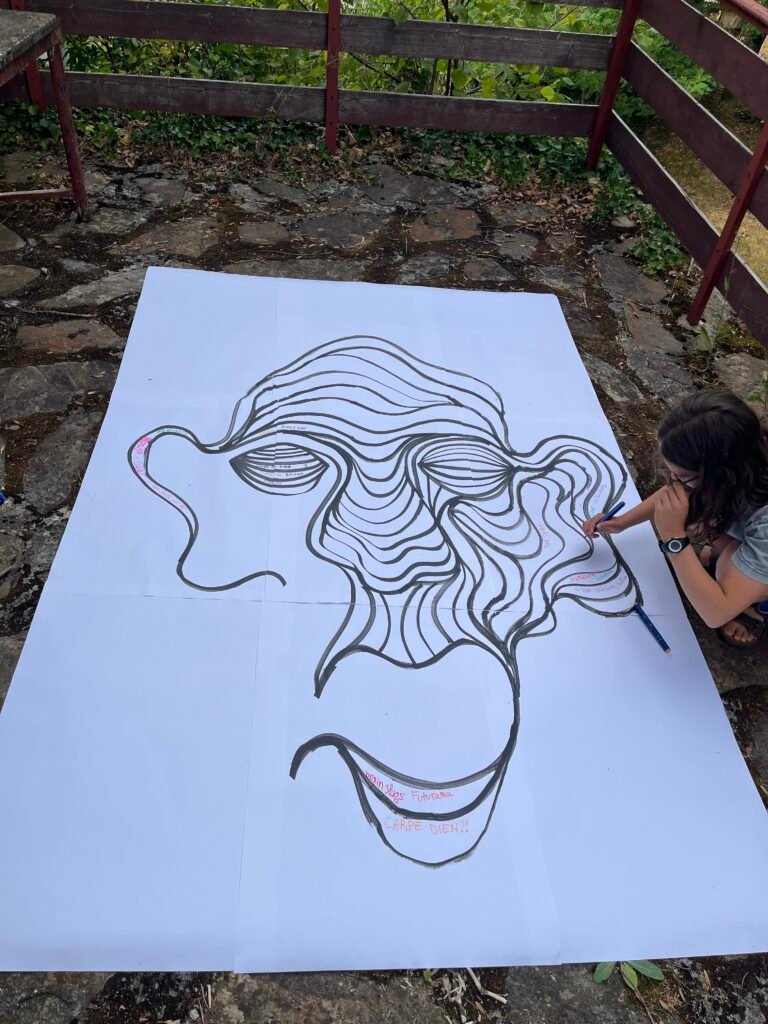
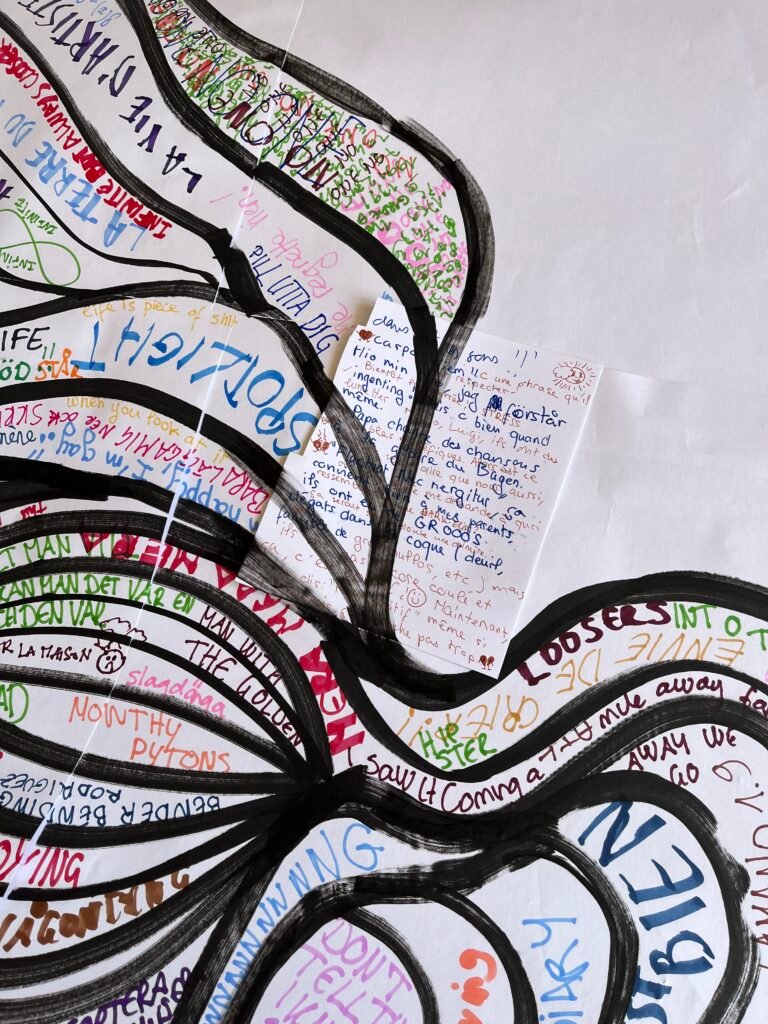
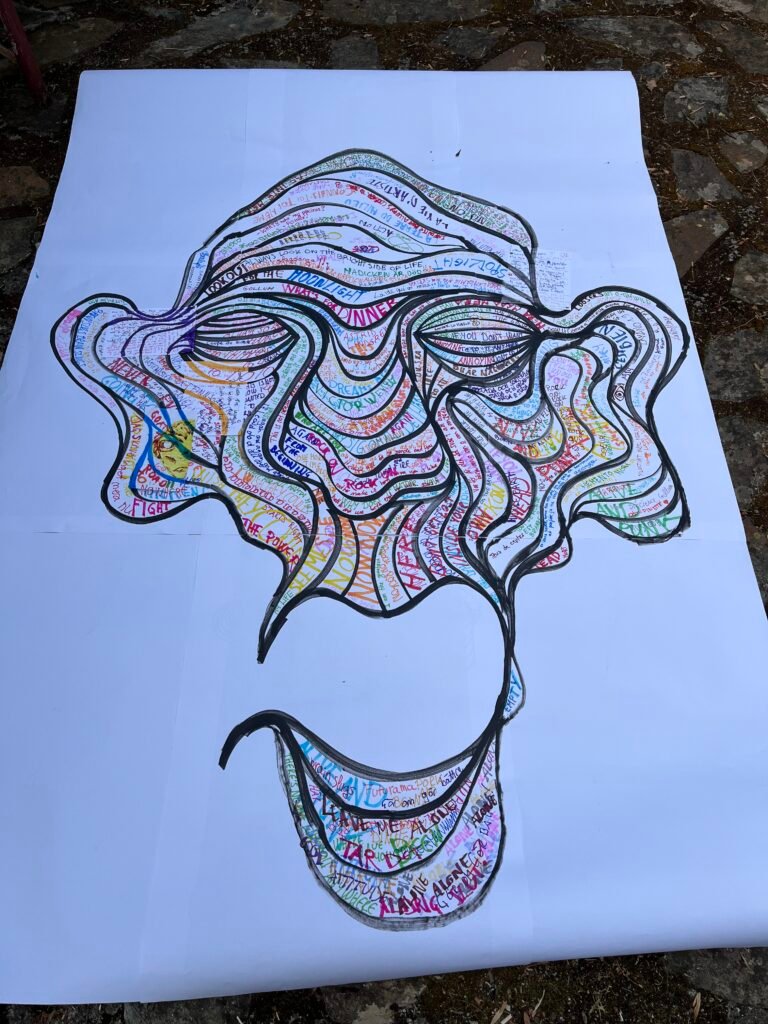
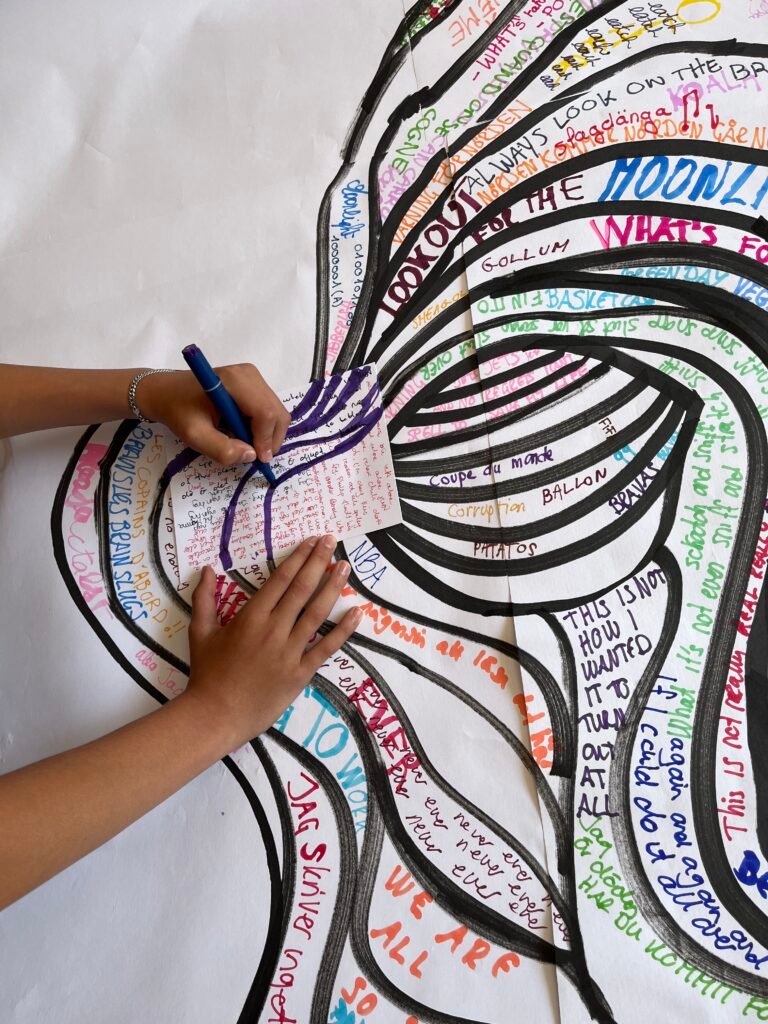
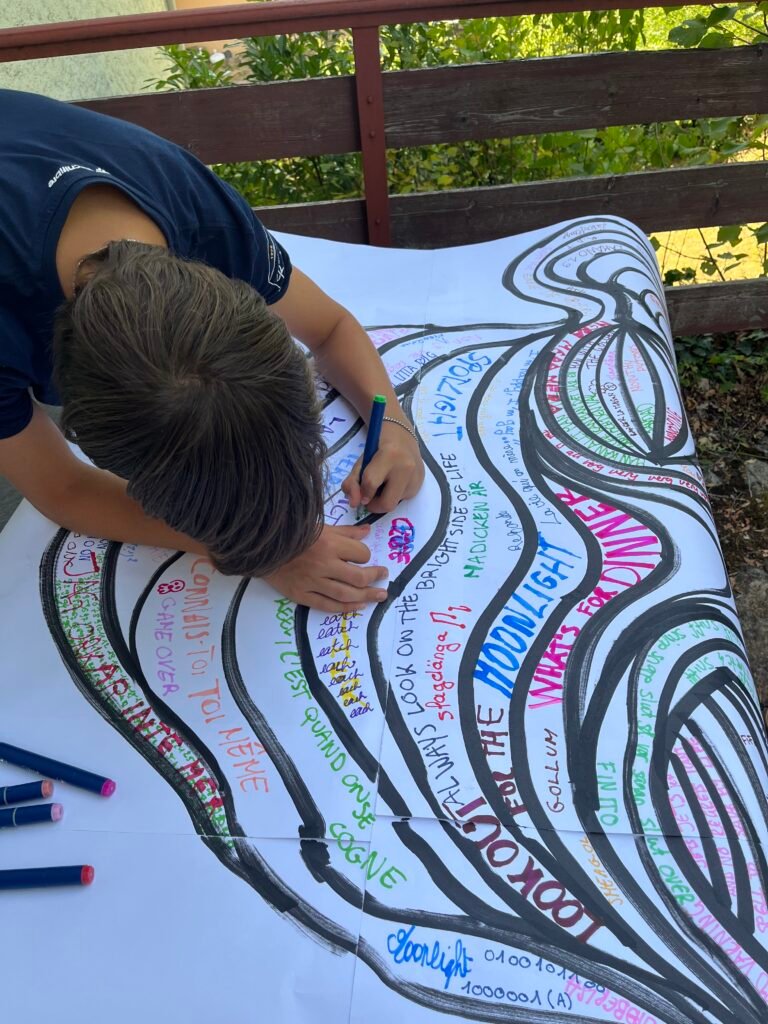
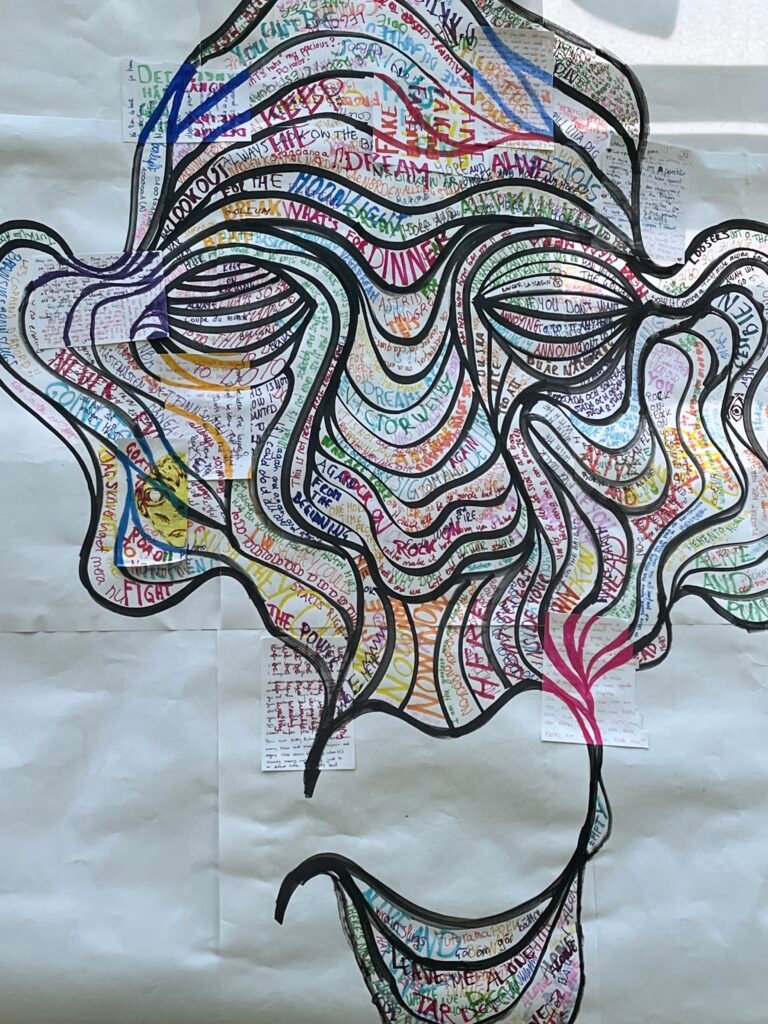
Large ink drawings of abstract faces are installed in the space as long paper surfaces. Before and during the performance, participants are invited to write directly onto them — fragments of thought, single words, memories, or anonymous reflections.
The text is not approached as narrative material, but as visual and spatial matter. Density, layering, rhythm, and accumulation become part of the environment the dancers inhabit.
During the performance, the paper surfaces are progressively transformed through physical action. The dancers roll, fold, compress, drag, and reshape the drawings, gradually turning flat surfaces into sculptural forms.
As the material changes, the choreography adapts with it. Space becomes increasingly unstable: pathways disappear, obstacles emerge, and new physical relationships develop between performers and objects.
The work is built through collaborative processes and task-based structures. Movement material emerges from repetition, spatial awareness, and collective timing rather than fixed character or narrative.
At the center of the project is the idea that small actions, repeated over time, can slowly transform both physical space and emotional perception.